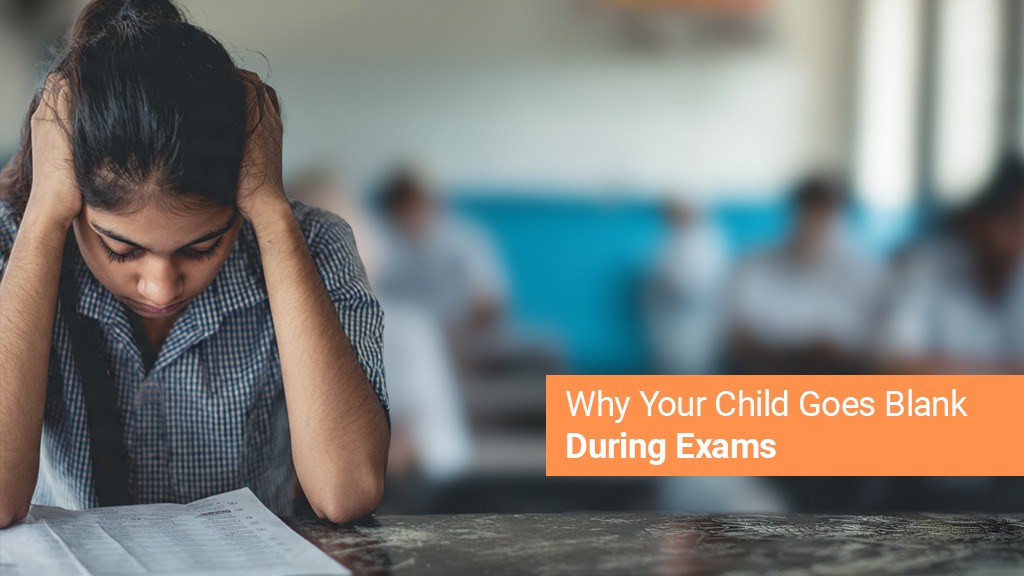
You watched your child study for weeks. They recited answers at the dinner table. They went to bed confident. And then, exam day. They come home crushed, saying the moment they saw the question paper, everything just… disappeared.
If this sounds familiar, you’re not imagining things. And more importantly, your child isn’t being lazy, dramatic, or careless. There’s a very real neurological reason this happens, and understanding it is the first step toward fixing it.
The Brain Under Pressure
When your child walks into an exam hall, their brain doesn’t just sense academic pressure; it senses threat. The environment is unfamiliar, the stakes feel high, and the clock is ticking. This triggers the brain’s amygdala (sometimes called the “fear centre”) to go on high alert.
In survival mode, the amygdala takes over. Blood flows to the muscles. The nervous system shifts into fight-or-flight. And here’s the problem: the prefrontal cortex (the part responsible for logical thinking, recall, and problem-solving) gets pushed to the sideline. The brain isn’t choosing to forget. It’s prioritizing survival over performance.
It’s not a character flaw. It’s biology.
What Cortisol Does to Memory
Stress causes the body to release cortisol, a hormone that’s incredibly useful in genuine emergencies but genuinely disruptive during an exam. High levels of cortisol interfere with the hippocampus, the region of the brain responsible for storing and retrieving memories.
In simple terms: the information is there. It was learned, it was stored, but the brain’s filing system becomes temporarily inaccessible under acute stress. The harder the child tries to remember, the more anxious they become, which releases more cortisol, which makes retrieval even harder. It becomes a cycle.
This is why children who knew all the answers the night before can stare blankly at a paper they should be able to answer easily.
Signs That Exam Stress Is More Than "Normal Nerves"
A little nervousness before an exam is healthy; it sharpens focus. But chronic exam-related stress is different, and it’s worth paying attention to. Look out for:
- Sleep disturbances in the weeks leading up to exams
- Stomach aches, headaches, or nausea without a clear medical cause
- Emotional withdrawal, irritability, or sudden mood swings
- Avoidance behaviors like putting off studying or pretending not to care
- Crying spells, panic attacks, or expressions of hopelessness around academics
- A pattern of underperforming despite clearly knowing the material
If your child shows several of these signs, what they’re experiencing may go beyond normal exam anxiety and could benefit from professional support.
What Parents Can Do
The instinct to motivate with pressure (“you need to study harder,” “this exam is important for your future”) often backfires. It adds to the cortisol load without giving the brain any tools to cope. Here’s what actually helps:
- Create psychological safety at home. Let your child know that their worth is not tied to their marks. A child who feels safe is a child whose nervous system is regulated, and a regulated nervous system learns and recalls information far more effectively.
- Teach them simple stress-regulation techniques. Box breathing (inhale 4 counts, hold 4, exhale 4, hold 4) before an exam can genuinely calm the nervous system within minutes. Brief physical movement (even a short walk) helps metabolize excess cortisol.
- Build sleep and rest into exam prep. Sleep is when memory consolidates. Cramming late into the night and cutting sleep is neurologically counterproductive. A well-rested brain performs significantly better under pressure.
- Practice under simulated conditions. One reason the exam hall triggers such anxiety is unfamiliarity. Timed mock tests, done in a quiet room with a real timer, help the brain associate “exam-like conditions” with calm and competence rather than threat.
- Talk about the fear, not just the syllabus. Ask your child how they feel about the exam, not just whether they’ve finished studying. Naming anxiety reduces its power. Children who can articulate their fear are already halfway to managing it.
When to Seek Professional Help
If exam anxiety is persistent, severe, or significantly affecting your child’s wellbeing or daily life, it may be time to speak with a specialist. A trained professional can help your child build lasting emotional regulation tools, work through performance anxiety, and develop a healthier relationship with achievement and self-worth.
This isn’t about making excuses for poor results. It’s about ensuring your child has the internal resources to actually show what they know.
You Don't Have to Figure This Out Alone
At Nirvaana, we offer specialized stress and anxiety management programs for children and adolescents, designed to address the root causes of exam anxiety, not just the symptoms.
If your child is struggling with exam-related stress, reach out to us. Early support makes a lasting difference.